When your Oncor Electric bill spikes every July, you start scrutinizing every window in your Benbrook ranch or Ridglea Hills home. Greater SW Fort Worth homeowners face a brutal reality: afternoon temperatures regularly exceed 100°F, and that solar heat gain through untreated windows can increase cooling costs by 25-30% (Source: U.S. Department of Energy, 2023). The question isn’t whether you need window treatments—it’s which type actually performs in our specific Texas climate.
If you’ve been comparing honeycomb shades Fort Worth dealers offer against the classic look of roman shades, you’re not alone. Both options appear in nearly every Hulen Mall area showroom, but the sales pitches rarely explain how each performs when your west-facing windows take the full force of a 105°F afternoon near Trinity Trails. This comparison breaks down exactly what works for SW Fort Worth’s mix of modern open-concept builds and traditional ranch-style homes.
Why SW Fort Worth Windows Need More Than Basic Blinds
The Summer Heat Transfer Problem
Standard single-pane windows—still common in older Wedgwood homes built before 1980—allow approximately 87% of solar heat to pass directly into your living space (Source: ENERGY STAR, 2022). Even dual-pane windows in newer construction only block about 25-30% of heat without additional treatments. During Fort Worth’s average of 102 days above 90°F annually (Source: National Weather Service, Fort Worth, 2023), that unfiltered heat forces your HVAC system into overdrive.
Oncor Rate Structures Make Insulation Critical
Your electric rates don’t stay flat during peak summer demand. Oncor Electric’s tiered delivery charges mean that high-usage households in Greater SW Fort Worth pay significantly more per kilowatt-hour once they exceed baseline consumption. Reducing heat gain at the window level keeps you in lower rate tiers. Window shades that actually insulate can reduce summer cooling costs by 15-25% (Source: U.S. Department of Energy, 2023).
Cellular Shades: The Insulation Champion
How Honeycomb Construction Works
Cellular shades—also called honeycomb shades—feature a distinctive pocket structure that traps air between your window glass and your room. This dead air space creates genuine insulation, similar to how wall insulation works. The cellular design comes in single, double, or triple-cell configurations, with each additional cell layer increasing R-value.
For Fort Worth’s extreme summer temperatures, double-cell shades with a minimum 3/8″ cell size deliver the best balance of performance and value. Triple-cell options exist but add cost without proportional benefit in our climate zone.
Performance Specifications That Matter
- R-value range: 2.0 to 5.0 depending on cell configuration (Source: Attachments Energy Rating Council, 2023)
- Solar heat gain reduction: Up to 60% with reflective backing
- Light control options: Light-filtering, room-darkening, or blackout fabrics
- Operating styles: Cordless lift, top-down/bottom-up, motorized
Best Applications in SW Fort Worth Homes
Cellular shades excel in the large picture windows common to Ridglea Hills mid-century ranches and the floor-to-ceiling glass in newer Benbrook construction. If your home faces west toward the Trinity River corridor, honeycomb shades on those windows will deliver measurable Oncor bill reductions. They also work exceptionally well in bedrooms where you want both energy savings and room-darkening capability.
Roman Shades: The Design-Forward Option
Construction and Fabric Variations
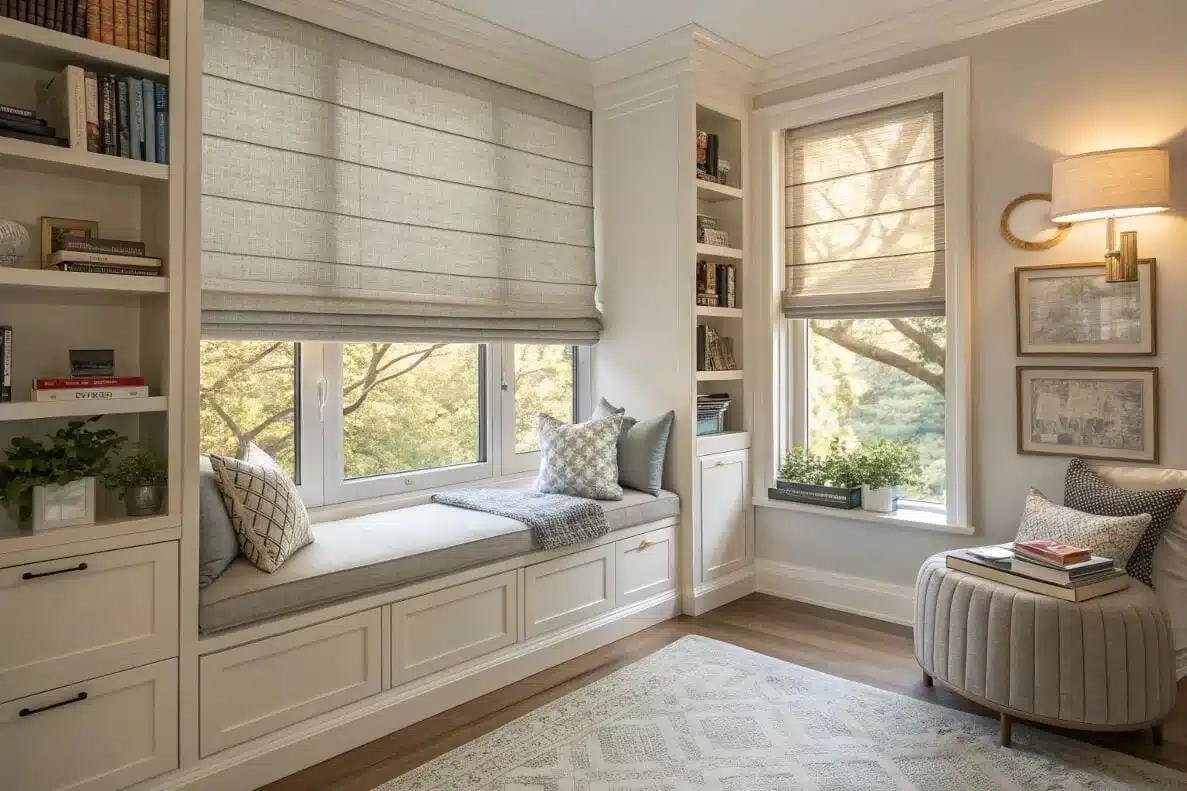
Roman shades use a single layer of fabric that folds into horizontal pleats when raised. Unlike cellular shades’ engineered air pockets, roman shades rely entirely on fabric density and lining options for thermal performance. The available styles include flat-fold, hobbled (looped), and relaxed designs—each creating a distinctly different aesthetic.
For Greater SW Fort Worth homes with traditional architecture, roman shades offer superior visual warmth and textile variety. You can select from cotton, linen, silk blends, and performance fabrics that complement Wedgwood’s classic interiors or Ridglea Hills’ established elegance.
Thermal Performance Reality Check
Here’s the honest assessment: unlined roman shades provide minimal insulation—approximately R-1 or less. However, adding a thermal backing or blackout lining increases performance significantly:
- Standard lining: Adds privacy, minimal thermal benefit
- Thermal lining: White reflective backing reduces heat gain by approximately 33% (Source: Hunter Douglas Laboratory Testing, 2022)
- Blackout lining: Maximum light blocking, moderate insulation improvement
Where Roman Shades Make Sense
Roman shades remain the right choice when your design priorities outweigh maximum energy performance. In formal living rooms, dining areas, or historic homes near the Hulen Mall area where architectural character matters, a well-made roman shade in quality fabric adds value that pure insulation numbers don’t capture.
Head-to-Head Comparison for Fort Worth Conditions
| Factor | Cellular Shades | Roman Shades |
|---|---|---|
| Heat Gain Reduction | Up to 60% | Up to 33% (with thermal lining) |
| R-Value Range | 2.0-5.0 | 0.5-2.0 |
| Best For | West/south windows, large glass | Formal rooms, design priority |
| Price Range (per window) | $150-$450 | $200-$600+ |
| Durability | 10-15 years typical | 8-12 years typical |
| Cleaning Ease | Moderate (dusting, spot clean) | More complex (fabric dependent) |
For the typical SW Fort Worth homeowner focused on hometown value—getting real performance for your dollar—cellular shades deliver better energy savings per dollar invested. However, many Ridglea Hills and Benbrook homeowners choose a hybrid approach: cellular shades on high-heat-gain windows and roman shades in public-facing rooms where aesthetics drive the decision.
Matching Shades to Your Home’s Architecture
Modern Open-Concept Homes
Newer construction in Greater SW Fort Worth often features open floor plans with large window expanses. These homes benefit from cellular shades in neutral tones that disappear visually while providing maximum insulation. Motorized lift systems make sense when you’re covering multiple large windows—you can lower all west-facing shades simultaneously at 3 PM when the summer heat intensifies.
Traditional Ranch Homes
The single-story ranches throughout Wedgwood and Benbrook typically have smaller individual windows but more of them. You might have 15-20 windows to treat compared to 8-10 in a newer open-concept build. Here, cordless cellular shades in the $150-250 range offer excellent value. For front-facing windows visible from the street, consider roman shades that complement your home’s established character.
Smart Strategy: Prioritize your highest-heat-gain windows first. In most SW Fort Worth homes, that means west-facing windows and any south-facing windows without porch coverage. Treating just 4-6 critical windows with quality cellular shades often delivers 70% of possible energy savings at half the cost of whole-home treatment.
Installation Considerations for Maximum Performance
Inside vs. Outside Mount
Inside-mount installations fit within your window frame for a clean, built-in appearance. Outside-mount installations cover the entire window opening plus surrounding trim. For pure energy performance in Fort Worth’s extreme heat, outside mounts with minimal light gaps outperform inside mounts by approximately 15% (Source: Lawrence Berkeley National Laboratory, 2021). The light gaps around inside-mounted shades allow convective heat loops that reduce effectiveness.
Professional Measurement Matters
Window measurements in older Wedgwood and Ridglea Hills homes rarely come out perfectly square. Professional measurement ensures your shades fit without gaps that compromise both appearance and thermal performance. A 1/4″ gap on each side of an improperly measured shade can reduce insulation performance by up to 20%.
Your Next Step: Compare Real Options Side by Side
Reading specifications only takes you so far. You need to see and touch both cellular and roman shade options in fabrics and colors that actually work with your Fort Worth home’s interior. You need pricing specific to your window sizes—not estimates based on “average” windows that don’t match yours.
Get a free side-by-side quote for both cellular and roman shade options for your specific windows. We’ll measure, provide samples, and show you exactly how each choice performs in Greater SW Fort Worth’s demanding climate. Serving homeowners throughout Benbrook, Wedgwood, Ridglea Hills, and the greater Hulen Mall area.
Schedule your in-home consultation today—before the next 100°F streak hits and your Oncor bill reminds you why window insulation matters.
Frequently Asked Questions
Can I mix cellular and roman shades in the same Fort Worth home?
Absolutely—this hybrid approach is popular throughout Benbrook and Ridglea Hills. Many homeowners install cellular shades on west and south-facing windows for maximum heat reduction, then use roman shades in formal living and dining areas where the design impact matters more. The key is selecting coordinating colors and similar mounting styles so the mix appears intentional rather than mismatched.
How long do cellular shades typically last in Texas heat conditions?
Quality cellular shades from reputable manufacturers typically last 10-15 years in Greater SW Fort Worth homes, even with daily sun exposure. Fabric degradation accelerates primarily from UV exposure rather than heat, so shades on west-facing windows may show fading sooner. Choosing solution-dyed fabrics over printed fabrics significantly extends color retention in high-UV conditions.
Will motorized shades work during a Fort Worth power outage?
Battery-powered motorized systems operate independently from your home’s electrical system and will function during Oncor outages. Hardwired motorized systems require power unless you’ve installed a battery backup. If power reliability concerns you, specify battery or rechargeable battery motors during your consultation—they’re standard options from most manufacturers.
Do cellular shades help with Fort Worth winter heating costs too?
Yes, the same insulating air pockets that block summer heat gain also reduce winter heat loss. The U.S. Department of Energy reports that cellular shades can reduce heat loss through windows by up to 40% during heating season. Given Fort Worth’s occasional hard freezes and heating degree days, you’ll see modest but measurable savings on winter gas or electric heating bills—typically 5-10% of heating costs for well-insulated installations.